
What We See on a Typical Service Call
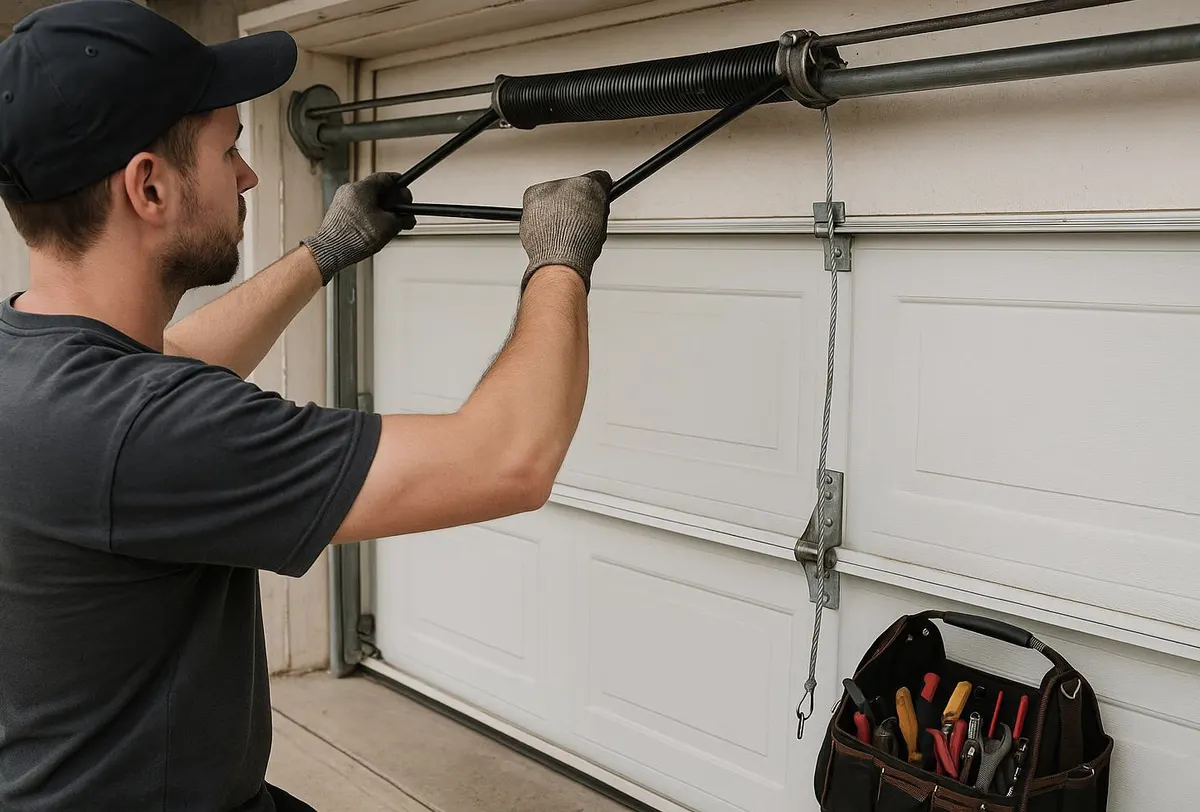
The call usually starts the same way: the remote works fine, the door starts down, then stops a few inches off the floor and reverses back up like something's in the way. Or it won't even attempt to close. The homeowner has checked for obvious obstructions and found nothing. Nine times out of ten, when we get down on the floor and look at the two small sensor eyes near the tracks, the answer is right there — a film of pollen and humidity haze on one lens, a spiderweb strung across the beam from a warm, damp night, or a bracket knocked a few degrees out of alignment by a mower, a bike, or just years of garage door vibration. After an afternoon downpour we also see plenty of fogged-up lenses from the temperature swing between a hot, humid garage and cooler evening air.
Why the Beam Breaks
Photo-eye sensors work by sending an invisible beam between two small units mounted a few inches off the floor on either side of the door. If anything blocks that beam while the door is closing, the opener reverses the door instead of letting it close on whatever's in the way. A few things commonly interrupt that beam or throw it out of alignment around here:
- Dust, pollen, and moisture film — Alabama's humidity keeps a light, sticky residue on everything in the garage, and it builds up on sensor lenses faster than most people expect.
- Condensation — swings between hot, humid afternoons and cooler nights can fog the lenses, especially in garages without much insulation or airflow.
- Bumped or vibrated brackets — storm winds that rattle the door, a car bumper tap, or someone leaning a ladder against the track can nudge a sensor just enough to lose alignment.
- Low sun angle — as days get shorter heading into fall and winter, direct morning or late-afternoon sun can shine straight into a receiving eye and wash out the signal.
- Corroded or chewed wiring — moisture and the occasional rodent can damage the low-voltage wiring that runs to each sensor, especially where wood framing has swelled or shifted.
How to Clean and Align Them Yourself
Before assuming the worst, most sensor issues can be fixed in ten minutes:
- Disconnect or unplug the opener so it can't cycle while you're working near the door.
- Wipe each lens gently with a soft, dry microfiber cloth or one barely dampened with water. Skip ammonia-based glass cleaners — they can leave a haze that's worse than the dust.
- Check that both sensors sit at the same height, generally around six inches off the floor, and are pointed directly at each other. A small level helps confirm they're not tilted.
- Loosen the wing-nut or screw holding the bracket, nudge the sensor slightly, and watch the indicator LED on each unit. Most pairs show a solid light when properly aligned and a flicker or no light when they're off.
- Once the LEDs hold steady, tighten the bracket back down without over-torquing it, which can throw off alignment again.
- Restore power, then test by starting the door down and waving a broom handle through the beam path — the door should reverse immediately.
If the lenses are clean, the brackets are solid, and the LEDs still won't hold steady, look at the wiring where it enters each sensor and runs back to the opener. Cracked insulation, green corrosion on the terminals, or chew marks point to a wiring problem rather than a dirty lens.
Why You Should Never Bypass Them
When a sensor keeps causing trouble, it's tempting to disconnect it, tape the wires together, or jam something in front of the opener's logic board to force the door closed anyway. This disables the entrapment protection the sensors exist to provide, and it's one of the few garage door shortcuts that can genuinely hurt someone — a pet, a child, or an adult who doesn't clear the opening in time has no safety net if the door doesn't sense them. These sensors are part of a nationally recognized safety standard for residential garage door openers for good reason. During hurricane season, wind-rated doors already take more stress from gusts and wind-driven debris, and a door that can't auto-reverse reliably is a bigger liability when storms are pushing it around. A quick bypass to get the door closed tonight isn't worth the risk if it stays disconnected.
When to Call Mt Olive Garage Door
If you've cleaned the lenses, realigned the brackets, and the door still won't cooperate, or if you find damaged wiring, a cracked sensor lens, or a bent bracket you can't straighten, it's time to call us. Our Garage Door Opener Service covers diagnosing sensor and logic board issues, replacing a damaged photo-eye pair, and checking the opener's force and travel settings so the door behaves correctly once the sensors are working. We also recommend Garage Door Maintenance once or twice a year, especially heading into storm season, to catch misalignment, swelling door panels, and rust before they turn into a safety issue or a service call at an inconvenient hour.
Mt Olive Garage Door proudly serves Mt Olive, Gardendale, Kimberly, Warrior, Morris, Fultondale, Center Point, and Trafford. If your garage door isn't closing right, give us a call — we'll find the real problem and fix it correctly the first time.